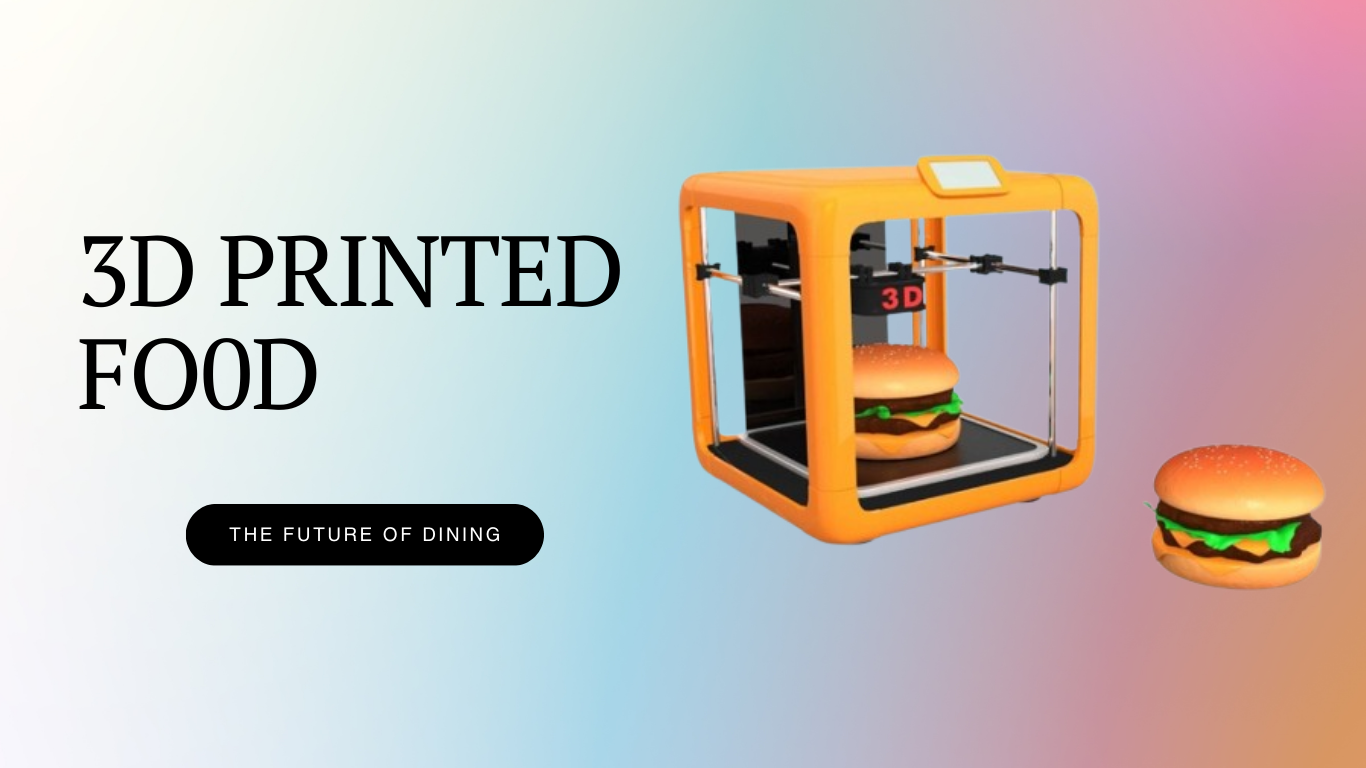
Imagine you’re hungry. Instead of stirring up a meal, you enter your menu choices into a computer, and your dinner appears before you. It may sound like science fiction, but the future is here. 3D-printed food is revolutionizing the way we think about dining and cooking. In this article, we’ll explore the exciting world of 3D-printed food, its history, current applications, and future potential.
The Beginnings of 3D Printing:
3D printing technology has come a long way since its inception. The origin of 3D printing dates back to the early 1980s. In 1983, researchers produced the first item using a 3D printer, an eyewash cup. Today, the process is used to create toys, prosthetics, and automotive parts. You can even have a 3D printer at home. But how did this technology move into the kitchen?
The Evolution of 3D Printed Food:
1. NASA’s Role in 3D Food Printing:
The journey of 3D-printed food began in 2006 when NASA started researching 3D-printed food to create pizzas for astronauts. The goal was to provide astronauts with nutritious and satisfying meals during long space missions. This research laid the groundwork for the development of 3D food printing technology.
2. Innovations at Columbia University’s Creative Machines Lab:
NASA wasn’t the only one interested in printing food. In 2007, researchers at Columbia University’s Creative Machines Lab produced the Fab@Home personal fabrication system, which could create edible objects using cake frosting, chocolate, processed cheese, and peanut butter. This innovation demonstrated the potential of 3D printing technology to create a variety of food items.
3. 3D Printed Candies and Beyond:
In 2011, the first bakery making 3D-printed goods opened. Using a standard 3D printer, Sugar Labs produced intricate candies marketed as ornaments. This milestone marked the beginning of the commercialization of 3D-printed food. By 2014, food-specific 3D printers were being created and marketed to restaurants to produce intricately designed meals. However, the food still needed to be cooked traditionally.
The Advancements in 3D Food Printing:
1. Laser Cooking:
Recently, researchers at the Creative Machines Lab have been searching for ways to cook food as it’s being printed. Their solution is lasers. Adding lasers to a 3D printer allows them to print and cook the food in the same machine. This innovation eliminates the need for traditional cooking methods and streamlines the food preparation process.
2. Taste and Quality:
How does it taste? Well, the laser-cooked 3D-printed chicken was twice as juicy as conventionally cooked chicken. It also didn’t shrink as much and tasted like regular chicken. This breakthrough demonstrates that 3D-printed food can be both delicious and high quality.
Benefits of 3D Printed Food:
1. Customization and Precision:
One of the significant benefits of 3D-printed food is the ability to customize meals according to individual preferences and dietary needs. The technology allows for precise control over the ingredients and portion sizes, making it possible to create meals tailored to specific nutritional requirements.
2. Fighting Food Waste:
Printing food could help fight food waste. Netherlands-based Uprising Foods wants to turn discarded food into edible printing material. This innovative approach could reduce food waste and create sustainable food sources. By utilizing surplus food and transforming it into edible products, 3D printing technology can contribute to a more sustainable food system.
3. Unique Dining Experiences:
If you want to experience 3D-printed food, you could visit Food Ink in the UK. This restaurant touts itself as a one-of-a-kind gourmet experience where all the food, utensils, and furniture are produced through 3D printing. A Japanese company has even created a standardized cube form of food using 3D printers, much like the food eaten by Captain Kirk and Mr. Spock on the Starship Enterprise.
Challenges and Considerations:
1. Cost and Accessibility:
While 3D food printing technology holds great promise, there are still challenges to overcome. One of the main challenges is the cost of 3D printers and the materials required for food printing. These costs need to be reduced to make the technology accessible to a broader audience.
2. Regulation and Safety:
Another challenge is the regulation and safety of 3D-printed food. Ensuring that printed food meets health and safety standards is crucial. Regulatory bodies need to establish guidelines and standards for the production and consumption of 3D-printed food to protect consumers.
3. Environmental Impact:
While 3D printing can help reduce food waste, it is essential to consider the environmental impact of the technology itself. The production of 3D printers and the materials used for printing can have environmental consequences. Therefore, it is necessary to develop sustainable practices and materials to minimize the environmental footprint of 3D food printing.
The Future of 3D Printed Food:
1. Expanding Applications:
The future of 3D-printed food is bright, with the technology expanding into various applications. Beyond creating customized meals, 3D printing can be used to produce food for people with dietary restrictions, such as gluten-free or allergen-free options. The technology also has the potential to create nutrient-dense food for individuals with specific health conditions.
2. Integration with Agriculture:
3D food printing technology can also integrate with agriculture to create sustainable food production systems. By using locally sourced ingredients and reducing food waste, 3D printing can contribute to a more sustainable and efficient food supply chain.
3. Future Dining Experiences:
As technology advances, we can expect to see more innovative dining experiences incorporating 3D-printed food. Restaurants may offer interactive dining experiences where customers can design their meals and watch them being printed and cooked before their eyes. This fusion of technology and gastronomy will create memorable and unique dining experiences.
Conclusion:
The future of dining is undoubtedly exciting, with 3D-printed food opening up new possibilities for sustainability, convenience, and innovation. From fighting food waste to creating unique dining experiences, 3D-printed food could revolutionize the way we think about meals. As technology advances and becomes more accessible, the potential for 3D-printed food to become a basic in our diets increases. Embracing this technology could lead to a more sustainable and efficient food system, providing solutions to some of the biggest challenges we face today.
FAQs:
1. What is 3D-printed food?
3D-printed food is created using a 3D printer that layers edible materials to form food items.
2. How does 3D-printed food taste?
Laser-cooked 3D-printed food, like chicken, is twice as juicy as conventionally cooked food and tastes similar to regular food.
3. Can 3D-printed food help reduce food waste?
Yes, companies like Uprising Foods are turning discarded food into edible printing material to reduce food waste.
4. What are some examples of 3D-printed food?
Examples include intricate candies from Sugar Labs, plant-based meat from Redefine Meat, and standardized cube food from a Japanese company.
5. Where can I experience 3D-printed food?
Food Ink in the UK offers a unique dining experience where all the food, utensils, and furniture are produced through 3D printing.
6. What is the future potential of 3D-printed food?
3D-printed food could become a sustainable and convenient food source, with the potential to fight food waste and create unique dining experiences.