
7 Best AI Tools You Need to Use in 2025
If you’re not using AI tools in 2025, you’re missing out! Hi everyone, I’m Ishan Sharma, and in this article, I’ll share seven amazing AI tools that will help you save time, make more money, and improve your quality of life. Make sure you watch till the end because the last tool will blow your mind.
1. Napkin AI
Napkin AI is a brilliant tool that lets you turn text into stunning infographics for free. You can create a free account, open a blank document, and write down the text you want to turn into an infographic. With a click of a button, Napkin AI generates a beautiful infographic that you can customize and download in high quality.
Key Features
- Create infographics effortlessly.
- Customize text, colors, fonts, and other details.
- Download in various formats like PDF, SVG, and PNG.
I’ve used Napkin AI for presentations, articles, and client reports, saving both time and money.
2. Clay AI
Clay AI is perfect for lead generation and sales outreach. Create a free account, describe your target audience, and Clay AI will generate a list of potential customers. It even helps you craft personalized emails and sends them out automatically.
Key Features
- Generate leads based on audience description.
- Create and send personalized emails.
- Ideal for freelancers and business owners.
If you’re looking to grow your business or increase sales, Clay AI is a must-try tool.
3. Notebook LM by Google
Notebook LM is an excellent tool for research and learning. It can turn blog posts, YouTube videos, and other content into audio podcasts. The new update even lets you interact with the podcast in real-time, asking questions and getting answers instantly.
Key Features
- Convert content into audio podcasts.
- Interact with podcasts in real-time.
- Supports multiple content sources like PDFs, docs, and websites.
This tool is revolutionary for learners and researchers, making information more accessible and interactive.
4. Crew AI
Crew AI is an automation workflow app that lets you create workflows and automate tasks using AI agents. You can customize workflows, choose models, and deploy them to work continuously in the cloud.
Key Features
- Automate tasks with AI agents.
- Customize workflows and choose models.
- Easy to use with drag-and-drop features.
Crew AI is perfect for those looking to save time and automate repetitive tasks.
5. Replicate AI
Replicate AI allows you to use open-source AI tools without needing coding skills. You can create a free account, use API endpoints, and build visual interfaces to interact with APIs. An excellent use case is Flux Laura, which generates ultra-realistic images based on your descriptions.
Key Features
- Access open-source AI tools without coding.
- Build visual interfaces for APIs.
- Create realistic images with Flux Laura.
Replicate AI makes advanced AI tools accessible to everyone, regardless of coding knowledge.
6. Autopod AI
Autopod AI is a game-changer for video editors and podcast creators. It automatically cuts through podcasts with multiple frames, saving you hours of editing time. It identifies who is speaking and switches frames accordingly.
Key Features
- Automatically cuts and edits podcasts.
- Identifies and switches frames based on speakers.
- Saves significant editing time.
For video editors, this tool is invaluable and enhances productivity.
7. Omi
Imagine a tool that lets you turn thoughts into actions without lifting a finger. Omi is an AI hardware tool that detects brain signals and translates them into actions. Attach it to your head, and it can execute tasks just by thinking about them.
Key Features
- Detects brain signals and translates them into actions.
- Summarizes conversations and answers questions.
- Affordable at less than $100.
Omi is revolutionary and offers a glimpse into the future of AI technology.
Conclusion
These seven AI tools are game-changers in 2025, helping you save time, increase productivity, and improve your quality of life. Make sure to try them out using the links in the description. Also, check out the programs at Voxon University if you’re interested in learning more about AI and building your own tools.
FAQs
1. What is Napkin AI?
- Napkin AI is a tool that turns text into stunning infographics with just a click.
2. How does Clay AI help with sales outreach?
- Clay AI generates leads and creates personalized emails for potential customers.
3. What is the new feature of Notebook LM by Google?
- Notebook LM allows real-time interaction with podcasts, letting you ask questions and get answers instantly.
4. How can Crew AI automate tasks?
- Crew AI lets you create workflows and automate tasks using AI agents.
5. What does Replicate AI offer to non-developers?
- Replicate AI allows non-developers to use open-source AI tools with visual interfaces.
6. How does Autopod AI benefit video editors?
- Autopod AI automatically cuts and edits podcasts, saving significant editing time.
7. What is Omi and how does it work?
- Omi is an AI hardware tool that detects brain signals and translates them into actions, allowing you to execute tasks just by thinking.

The Reality Of Inflation:
Inflation is a topic that affects everyone many struggle to fully grasp its true impact simply put inflation refers to the rising cost of goods and services over time which leads to a decrease in purchasing power while it might seem like just a buzzword or something that economists deal with inflation has real-world effects on people daily lives from the price of groceries to the cost of gas inflation can make it harder for individuals and families to manage their finances what concerning is that inflation does not just make things more expensive in the short term it can also erode long-term savings.
For people living on a fixed income or those who do not have financial flexibility inflation can be especially difficult to navigate it not always a negative force sometimes moderate inflation signals a growing economy but when inflation spirals out of control it can lead to serious consequences such as reduced economic stability and an increase in the cost of living its causes and how it affects everyday life understanding this essential economic factor will help you make informed decisions and better prepare for the financial challenges it brings.
Causes of Inflation:
Inflation does not happen for a single reason rather it the result of several factors working together one of the most common causes is demand pull inflation which occurs when demand for goods and services exceeds the supply when more people want to buy something than what available, businesses raise prices to balance the demand, leading to inflation this often happens in a growing economy where consumers and businesses feel more confident leading to more spending another key cause is cost push inflation which happens when the cost of production rises if raw materials, wages or energy prices go up businesses often pass these extra costs onto consumers by increasing their prices.
When a country central bank like the Federal Reserve in the U.S increases the money supply by lowering interest rates or printing more money there more money circulating in the economy with more money available people and businesses have more to spend which can push prices up this is often done to stimulate economic growth but it can also lead to inflation if not managed carefully inflation can also be influenced by expectations if businesses and consumers expect prices to rise in the future they may act in ways that cause inflation.
Effects of Inflation:
Inflation can have a significant impact on almost every aspect of daily life and its effects are felt in both the short and long term one of the most noticeable effects is the decrease in purchasing power as prices rise the money you have today buys less than it did yesterday this means that even though your paycheck might stay the same the things you need or want to buy like food gas or clothes become more expensive over time this can make it harder for people especially those on fixed incomes to maintain their standard of living for savers inflation can also be a threat if the rate of inflation is higher than the interest earned on savings accounts or investments the real value of those savings decreases.
This is particularly concerning for retirees who rely on their savings for income inflation can lead to interest rates as central banks may raise rates to control rising prices this makes loans mortgages and credit card debt more expensive to manage on a broader scale inflation can create if prices rise too quickly it can lead to uncertainty and make it difficult for businesses to plan for the future this can result in slower economic growth and may even lead to a recession if inflation spirals out of control inflation can also cause social unrest as people struggle to afford basic needs and governments may struggle to find effective solutions.
Managing Inflation:
Managing inflation requires a combination of personal strategies and broader economic policies on a personal level one of the best ways to protect yourself from inflation is by adjusting your and spending habits when prices rise it essential to focus on essentials and cut back on non-essential expenses shopping smarter using discounts and comparing prices can help stretch your budget further another key strategy is in assets that tend to outpace inflation such as real estate stocks or commodities like gold these investments can increase in value over time helping to preserve your wealth as the cost of living rises on a larger scale governments and central banks play a crucial role in managing inflation.
They use tools like to control the money supply and interest rates when inflation is high central banks may increase interest rates to reduce spending and borrowing which can help cool down the economy they can also take steps to manage such as addressing shortages or improving production efficiency which can reduce the upward pressure on prices another important approach is though this is typically a more drastic measure used in extreme inflationary environments staying informed about inflation trends and understanding its causes can also help you make better financial decisions.
Consequences of High Inflation:
High inflation can have serious consequences for both individuals and the economy as a whole when inflation rises sharply the cost of everyday goods and services increases rapidly making it more difficult for people to afford basic necessities like food, housing and healthcare this can lead to for many particularly those with fixed incomes or in lower-income brackets the purchasing power of wages declines and people may find themselves struggling to keep up with rising prices even if their income remains the same for businesses high inflation can cause and make long-term planning difficult.
This could lead to lower profits or even business closures if they cannot manage these higher expenses inflation can cause as central banks try to control inflation by tightening monetary policy higher interest rates make borrowing more expensive which can slow down investment and economic growth in more severe cases high inflation can lead to a where wages and prices continually increase in response to each other this can cause inflation to spiral out of control leading to which is extremely damaging to an economy.

Airplanes | How Do They Fly?
“I can state flatly that heavier than air flying machines are impossible.” Baron William Thomson Kelvin told this quote in 1895. By 1917, Albert Einstein had explained the relationship between space and time. But that same year, he designed a flawed airplane wing. His attempt was based on an incomplete theory of flight. Insufficient and inaccurate explanations still circulate today. So, where did Einstein go wrong? And how do planes fly?
Understanding Lift:
Although we don’t usually think of it this way, air is a fluid medium, it’s just less dense than liquids like water. Objects that are less dense than air float in it, while denser objects need an upward force, known as lift, to keep them airborne. For aircraft, this force is primarily created by the wings.
The “Longer Path” or “Equal Transit Time” explanation is an especially common false explanation of lift. It claims that air molecules passing over the top of a curved wing travel further than those traveling underneath. For the air molecules above to reach the wing’s trailing edge in the same instance as those that split off and went below, air must travel faster above, creating a pocket of lower pressure that lifts the plane. This explanation has been thoroughly debunked. Air molecules above and below a wing do not need to reform into each other. In the real world, air moving on top reaches that trailing edge considerably sooner than the moving air below.
How Lift Develops:
Imagine a wing motion as if replicating an actual airplane wing movement. As that wing moves forward in the air surrounding it, it’s actually altering or influencing the stream of air. As air meets the wing’s solid surface, a thin layer sticks to the wing. This layer pulls the surrounding air with it. The air splits into pathways above and below the wing, following the wing’s contour. As the air routed above makes its way around the nose of the wing, it experiences centripetal acceleration, the force you also feel in a sharply turning car. Therefore, above, the air gathers more speed than the air traveling below. Coupled with this increased speed is a decrease in pressure above the wing, which pulls even more air across the upper surface of the wing. The air flowing across the lower surface has less change in direction and speed. The pressure across the wing’s lower surface must therefore be higher than that above the upper surface. This pressure difference leads to the force that lifts upwards. The more rapidly the plane moves, the more pressure difference it creates and thus the stronger the force is. When this upward force surpasses the downward force of gravity, the plane is off and running.
The smooth flow of air past curved wings. But curve shape is not the reason for a wing’s lift. Indeed, a flat wing angled upward deflected airflow creates lifting the air curves to follow it, building and sustaining the pressure difference. On the other hand, a curve that is too sharp or too steep angles is disastrous in this case, the airflow above breaks away from the wing and becomes turbulent.
Einstein’s Wing Design:
This is probably what happened with Einstein’s wing design, nicknamed “the cat’s back.” By increasing the wing’s curvature, Einstein thought it would generate more lift. But one test pilot reported that the plane wobbled like “a pregnant duck” in flight.
More Factors Affecting Lift:
Our explanation is still a simplified description of this nuanced, complex process. Other factors, such as the air sweeping meters beyond the wing’s surface, being carried up, then down, or air vortices formed at the wing tips, all impact lift. Even though experts may agree that a pressure difference produces lift, how they explain can differ. One might focus on the behavior of the air at the wing surface; another might draw attention to the upward force as the air is deflected downwards. But the math itself is not in dispute. Engineers use a particular set of formulas, known as the Navier-Stokes equations, to accurately model airflow around a wing and provide detailed descriptions of how lift is created.
Conclusion:
More than a century after Einstein’s experiment in aeronautics, the mystery of lift still continues. But when it feels like everything is about to come crashing down, remember, it’s just the physics of fluid in motion. It’s understanding lift and the factors that make it possible for engineers and pilots to design and operate aircraft in safety and efficiency. Next time you see a plane soaring through the sky, you’ll know it’s not magic, but science at work.
FAQs:
1. What is a lift in aviation?
Lift is an upward force that allows planes to stay aloft.
2. How is lift generated?
Lift is generated by the wings through pressure differences.
3. What was the flawed theory of lift?
The “Longer Path” explanation, which has been debunked.
4. How does wing curvature affect lift?
Wing curvature influences airflow and pressure differences.
5. What happened with Einstein’s wing design?
It was too curved, causing unstable flight.
6. What equations model lift?
The Navier-Stokes equations model airflow and lift generation.

$1M Net Worth | How to Easily Achieve It
Achieving a net worth of $1 million is a significant financial milestone that many aspire to reach. While some individuals become millionaires through sheer luck, most people spend their lives working towards this goal. Fortunately, some practical steps and strategies can help you achieve a $1M net worth more easily. This article will explore these strategies and provide a roadmap to financial freedom.
Define Your Financial Goals:
You need to define your financial goals before you embark on your journey to a $1M net worth. Do you want to be ultra-rich, or do you want to be financially free? Understanding your ultimate objective will guide your approach and help you stay focused.
Ultra-Rich vs. Financially Free:
Achieving a net worth exceeding $100 million makes one ultra-rich. This calls for a mindset and lifestyle that provides a whole-life commitment to building wealth and managing large businesses while battling intense stress levels. Attaining a net worth of $1 million, on the other hand, is realistic, providing one with financial freedom without sacrificing one’s life pursuing money.
Understanding Assets and Liabilities:
To be able to achieve $1M in net worth, you need to understand what an asset and liability are. A millionaire is one whose net worth exceeds $1 million. To find your net worth, subtract the amount of liabilities from your assets.
What Is an Asset?
Assets include anything that has monetary value that you own. This can include:
- Cash and bank accounts
- Real estate properties
- Stocks and bonds
- Precious metals such as gold
- Cars, Jewelry, etc.
The strategy of wealth generation is to add assets that generate wealth over some time. Real estate is one excellent example where, generally, real estate appreciates in value with significant returns over the investment time period.
What are Liabilities?
Liabilities are the liabilities and debts owned by you that include:
- Mortgaged loans
- Credit card bills
- Student debt
- Car debt
Liability reduction and better debt management lead to the building of net worth.
Real Estate Investment:
One of the most common and efficient ways to accumulate wealth is by owning real estate, reaching a $1M net worth. This is based on a rather simple concept: one buys a piece of property, rents it, and sells it at a profit. Here is the step-by-step process:
- Buy a Property: Just pay a down payment in most cases, typically 20% of the price. Take a loan for the rest.
- Rent your House: The rent collected from them can be used to pay your mortgage and all other expenses.
- Property Appreciation: The value of a property grows over the years. That increases your net worth.
- Sell for a Profit: You will eventually sell the property at a higher price than you paid for it, hence making a very good profit.
Real estate investment requires initial capital and some risks, but if done with proper research and planning, it can be very rewarding.
Leveraging Knowledge and Resources:
The most effective way to succeed in real estate and other investments is by leveraging knowledge and resources. Educate yourself about the market, learn from experts, and use available tools to make informed decisions.
The Importance of Continuous Learning:
Check out books, attend seminars, and stay abreast of industry trends. For example, resources like Shortform can provide summaries and guides to help you in getting the essentials and strategies down fast.
Technology:
The use of technology makes the investment journey easier as it increases efficiency and seems to make it easier. Apps and platforms for market insights, investment management, or financial planning tools are invaluable. Take advantage of automation and data analytics to create a competitive advantage.
Other Investment Strategies:
While real estate is an excellent investment, there are other investment avenues that one should not forget. Diversifying an investment portfolio minimizes risk and increases the chances of better returns on investment.
Stock Market Investment:
Investment in the stock market can be quite rewarding. You can begin by researching companies with good growth prospects and investing in a combination of stocks, bonds, and mutual funds. Invest a fixed amount regularly to mitigate market volatility through dollar-cost averaging.
Entrepreneurship:
Entrepreneurship is a sure way to wealth if well executed. However, your business idea needs to be validated, and then you need to know your target market and build a solid business plan. Many businesses fail because of poor planning and execution, so it’s not a good idea to be too well-prepared.
The Role of Leverage:
Leverage is a powerful concept that can accelerate your journey to a $1M net worth. It involves using various resources to multiply your efforts and achieve greater results.
Labor Leverage:
Hiring people to perform tasks you can’t or don’t want to do can increase productivity. Delegating responsibilities allows you to focus on strategic decisions and growth opportunities.
Capital Leverage:
Using borrowed money or investing your own funds in opportunities that generate high returns is another form of leverage. Real estate and stock market investments are prime examples of capital leverage.
Code and Media Leverage:
In the digital age, technology offers immense leverage. Automating tasks using software, leveraging social media for marketing, and creating digital products that generate passive income can significantly boost your wealth-building efforts.
Managing Taxes and Expenses:
Underestimation of taxes and expenses impact on net worth- Most aspiring millionaires make it to minimize the impact of taxes and expenses on their funds. The chances of hitting your financial growth are maximized through effective tax planning and management of your expenses.
Tax Planning:
Tax laws and proper use of deductions and credits can help minimize a lot of money spent. Hiring a professional in tax consulting to develop tax efficiency that aligns with your financial goals will come in handy.
Expense Management:
Another area of importance is keeping your expenses under control. Set a budget, track your spending, and look for ways to eliminate unnecessary costs. Living below your means and prioritizing saving and investing will accelerate your path to a $1M net worth.
The Power of Compound Interest:
Compound interest is a powerful force that can exponentially grow your wealth over time. It involves earning interest on both your initial investment and the interest already accumulated.
How Compound Interest Works:
For instance, if you invested $10,000 with a 7% annual interest rate, you will have $10,700 at the end of one year. In the second year, you will get interest on $10,700 and so on. Over time, this can compound to large sums.
Compound Interest in Use:
To take advantage of compound interest, start investing early and make regular investments. Re-invest your earnings and sit back while your investments multiply and grow. The more time your money stays invested, the more pronounced the compounding effect.
Conclusion:
Achieving a $1M net worth is very realistic and achievable with the right strategies and mindset. Understanding assets and liabilities, investing in real estate, leveraging knowledge and resources, diversifying investments, using leverage, managing taxes and expenses, and controlling the power of compound interest can all cover the way to financial freedom. Stay focused, be patient, and make informed decisions, and you’ll be well on your way to reaching your $1M net worth goal.
FAQs:
1. What is the first step to achieving a $1M net worth?
Define your financial goals and decide between becoming ultra-rich or financially free.
2. How can real estate investment help build wealth?
Buy, rent out, and sell properties to benefit from their appreciation over time.
3. What is leverage, and how can it help in wealth-building?
Use resources like labor, capital, and technology to multiply your efforts.
4. Why is tax planning important in achieving a $1M net worth?
Save money and maximize growth by taking advantage of deductions and credits.
5. How does compound interest contribute to wealth-building?
Investments grow exponentially by earning interest on both the initial amount and accumulated interest.
6. What are some alternative investment strategies besides real estate?
Invest in the stock market, start a business, and diversify your portfolio.

6 Affordable Tips to Improve Your Health Daily
Improving your health doesn’t always have to be expensive. Here are six affordable or nearly free tips you can incorporate into your daily routine to enhance your well-being.
1. Use Vinegar
Vinegar, especially apple cider vinegar with the mother, provides acetic acid, which is crucial for producing butyrate—a short-chain fatty acid essential for gut health. Vinegar also has anti-cancer properties and promotes a diverse microbiome. Add various types of vinegar to your salads or drinks for a health boost.
2. Exercise Snacking
Exercise snacking involves short bouts of exercise done multiple times a day. It can be as effective as a 30-minute continuous workout in a gym. Dance for three minutes, do jumping jacks during TV commercials, or perform deep knee bends while brushing your teeth. These small exercises keep your metabolism flexible and improve overall health.
3. Walk After Dinner
A 10-minute stroll after dinner can dramatically lower blood sugar levels. Walking after meals is a common practice in many European communities and helps in better digestion and overall health.
4. Delay Breakfast
Eating breakfast later can improve metabolic flexibility, mitochondrial function, and overall health. Aim to delay your first meal of the day until 9:00 or 10:00 AM to maximize the benefits of fasting from your last meal of the previous day.
5. Get Enough Vitamin D
Vitamin D is crucial for a diverse microbiome, a strong immune system, and overall health. Aim for at least 5,000 to 10,000 IU of vitamin D3 daily. Sun exposure is a natural way to get vitamin D, but supplements may be necessary for most people.
6. Embrace Free Health Practices
Incorporate other free or low-cost practices such as drinking water, maintaining a balanced diet, and getting adequate sleep. These foundational habits are essential for long-term health and well-being.
FAQs
Q: How does vinegar improve gut health? A: Vinegar provides acetic acid, which is essential for producing butyrate—a short-chain fatty acid that supports gut health and prevents cancer.
Q: What is exercise snacking? A: Exercise snacking involves short bouts of exercise multiple times a day, which can be as effective as a continuous workout in a gym.
Q: Why should I walk after dinner? A: A 10-minute walk after dinner helps lower blood sugar levels and improves digestion.
Q: How does delaying breakfast benefit health? A: Delaying breakfast extends your fasting period from the previous day’s last meal, improving metabolic flexibility and mitochondrial function.
Q: Why is vitamin D important? A: Vitamin D supports a diverse microbiome, a strong immune system, and overall health. It also helps maintain a tight gut barrier and reduces permeability.
Conclusion
Incorporating these affordable or nearly free tips into your daily routine can significantly improve your overall health. Use vinegar for gut health, practice exercise snacking, walk after dinner, delay breakfast, get enough vitamin D, and embrace other free health practices. Small changes can lead to substantial improvements in your well-being.

How Inflation Impacts Your Personal Finances:
Inflation is when prices of things like food, clothes, and rent go up over time. This means that the money you have today may not buy as much in the future. It affects everyone, making it harder to save and plan for expenses. Understanding inflation can help people make better financial decisions and protect their money.
The Rising Cost of Living:
When inflation happens, the cost of everyday things goes up. People may notice that groceries, gas, and housing become more expensive. If wages do not increase at the same rate, it can be difficult to afford the same things as before. This is why saving money and planning for future expenses are important. Many families find themselves adjusting their budgets, cutting out unnecessary expenses, and looking for discounts to make ends meet.
How Inflation Affects Savings:
Money saved in a bank loses value over time if inflation is high. For example, if you save a certain amount today, but prices double in a few years, the same money will not buy as much as it once did. This is why some people invest their money in things that grow over time, like stocks or property, to keep up with rising prices. Banks also offer savings accounts with higher interest rates, which can help protect savings from losing value too quickly.
Impact on Purchasing Power:
Purchasing power is how much you can buy with your money. When inflation is high, people can buy fewer things with the same amount of money. This makes it important to be smart about spending. People may need to budget carefully and look for ways to save money by shopping wisely and cutting unnecessary expenses. They might switch to generic brands instead of name brands, cook more meals at home instead of eating out, or look for second-hand items instead of buying new ones.
Higher Interest Rates on Loans:
Inflation can also affect loans and debt. When prices rise, banks may increase interest rates, making it more expensive to borrow money. This means that paying off loans for houses, cars, or credit cards can take longer and cost more. It is important to manage debt wisely and avoid borrowing too much when interest rates are high. People may also consider refinancing loans to get better interest rates or paying off debts as quickly as possible to avoid extra costs.
The Importance of Smart Investing:
One way to protect money from inflation is through smart investments. Some people put their money in stocks, real estate, or gold because these things often grow in value over time. Learning about different investment options and making careful choices can help people protect their finances from inflation. It is also important to diversify investments, which means not putting all your money in one place. Having a mix of different investments reduces the risk of losing money.
How to Manage Finances during Inflation:
When inflation is high, people need to plan their finances carefully. Creating a budget helps in understanding where money is being spent. Finding ways to save, such as buying in bulk, using discounts, and reducing unnecessary expenses, can help in managing rising costs. It is also a good idea to have an emergency fund in case prices go up suddenly. Some families start using coupons, carpooling to save on gas, or finding ways to earn extra income through freelance work or side businesses.
Inflation and Wages:
If wages do not rise along with inflation, it becomes difficult for people to maintain their lifestyle. Some workers ask for salary raises to keep up with increasing costs. Others look for additional sources of income, like part-time jobs or side businesses, to make up for the difference. Employers may offer cost-of-living adjustments, but not everyone receives them. This is why it is important to develop skills that can lead to better-paying job opportunities over time.
Future Planning and Inflation:
Inflation affects long-term financial planning. Whether saving for college, a house, or retirement, people must think about how rising prices will impact their savings. Planning for inflation by setting aside more money and investing wisely can help in securing a stable financial future. Some people also consider adjusting their retirement plans by saving more than they initially planned, ensuring they have enough to cover their needs even if prices continue to rise.
The Psychological Impact of Inflation:
Inflation not only affects money but also how people feel about their finances. When prices rise quickly, people may feel stressed and worried about their future. This can lead to anxiety about not having enough money to cover basic needs. It is important to stay informed, make a solid financial plan, and not panic when inflation happens. Keeping a positive mindset and focusing on solutions can help reduce stress.
Conclusion:
Inflation makes things more expensive over time, affecting daily life, savings, loans, and wages. Understanding how it works helps people make smart financial choices. By budgeting, saving wisely, and considering investments, it is possible to manage money well even when prices go up. Planning ahead and making careful decisions can help protect personal finances from the effects of inflation. The key is to stay informed, adapt to changes, and be proactive in financial planning. By taking small but consistent steps, individuals and families can reduce the impact of inflation on their daily lives and secure a stable future.

3D Printed Fashion Trends to Watch
Technology is just changing the world of fashion in many new ways. Imagine wearing clothes made by machines, this was not even thought about in the past, and now look here we stand on the brink of exciting trends in fashion. This is the exciting and amazing world of 3D-printed fashion. 3D printing is bringing new ideas for the people of fashion designers and clothing lovers. Now let us see what are the new trends of 3D printed fashion that can catch everyone’s attention on the next runway.
1. Pioneering Designers and Haute Couture:
Iris van Herpen is a Dutch fashion designer who is at the forefront of the integration of 3D printing into haute couture. This visionary artist is bending the boundaries of what’s possible in fashion, creating an entirely new language of design that fuses technology and artistry into a breathtaking spectacle. Van Herpen’s approach to fashion is as unique as her designs. She does not make clothes but wearable sculptures. Her work is not only beautiful but intimate, connected with the human body deeply and profoundly. It is more than just an aesthetic; it challenges the status quo, pushes envelopes, and sets off new waves of innovation within fashion.
Her work is characterized by an unrelenting curiosity that leads her to experiment, which forms the basis of her creative process. 3D printing steps into the ring here. For Iris, 3D printing is more than just a tool. It is more of a creative partner that can help her give life to some of the most audacious ideas she has in mind. In fact, Iris was one of the first designers to integrate 3D printing into her collections and has continuously used it to create something truly groundbreaking. In fact, for instance, her famous “Escapism” collection featured intricately detailed 3D printed pieces as if they had been spun by spiders. These pieces were not only visually striking, but they also represented a new level of complexity and precision that was previously unthinkable in fashion.
Beyond her own work, Van Herpen’s influence extends to generations of designers inspired by the potential of 3D printing. This has opened the floodgates to innovation and is changing the face of the fashion industry. From mass production to bespoke creations, Iris van Herpen’s work is not just about creating beautiful clothes; it’s about pushing the boundaries of what’s possible, challenging conventions, and reinventing the future of fashion. Her work is a testament to the power of creativity and innovation, envisioning a future where fashion is not just about trends but about expressing individuality and breaking free from constraints.
2. Revolutionizing Sportswear with 3D Printing:
It’s indeed a game changer from haute couture to sportswear with the Adidas Futurecraft 4D project. And for the sportswear, from what can be seen, is that Adidas’s trendsetting would not just define but dictate style. Using this Futurecraft 4D project Adidas is able to revolutionize and transform sneaker manufacturing with the support of 3D printing for technology and in the field of fashion.
The Futurecraft 4D project is not just about creating a new shoe but about rethinking the entire process of how shoes are made. It’s about taking a step into the future where customization isn’t a luxury but a norm. The beauty of this project lies not just in its end product but in its process. Imagine a world in which your shoes are not mass-produced but custom-made for you, designed with specific support, comfort, or style that suits your needs. That is exactly what Adidas hopes to create in the Futurecraft 4D.
Adidas has been using 3D printing technology to produce a midsole tailored specifically to the requirements of each individual wearer. This ensures that such a shoe can provide the right degree of cushioning, support, and performance to its user, whether he or she is a professional athlete or an avid runner. It is a form of customization that is not only purely about comfort but also geared towards performance. By this kind of tailoring to suit the wearer, Adidas can help improve athletic performance, reduce the likelihood of injury, and even extend the career of an athlete.
However, the benefits of the Futurecraft 4D project go beyond the individual. The use of 3D printing reduces waste, cuts down production time, and even lowers carbon footprints. It is a step towards a future where fashion and technology will converge to create benefits not just for the individual but also for the planet. Futurecraft 4D is just the beginning. It is a peek into a future where technology and fashion go hand in hand, where customization is the norm, and where sustainability is a given. Adidas’s innovative use of 3D printing technology heralds a new era in sportswear. It is not only a step forward for Adidas but a leap forward for the entire fashion industry. The future of fashion is here and is being dictated by 3D printing.
3. Personalization and Unique Style:
One of the most fascinating aspects of 3D printing in fashion is its potential for revolutionizing customization. Forget the small, medium, or large sizes. Just imagine a world where your clothes are tailored according to your specific measurements and requirements down to the last millimeter. This is no pipe dream-it’s the future that 3D printing promises. By digitally modeling a garment, designers can alter and adjust each detail for that perfect fit on the wearer. Result? Clothes fit like a second skin and fashions become a true statement of individuality.
3D printing offers unprecedented customization levels in the aspects of shape, size, color, and even material. Every aspect of a garment can be made according to your wants. What was unattainable previously with conventional manufacturing techniques, 3D printing with all its techniques makes this happen and from that point on, fashion becomes more inclusive and diverse regarding the kind of bodies, styles, and tastes one’s clothing holds. This is about clothing that articulates who you are and what you stand for.
4. Sustainability and Waste Minimization:
One of the fashion industry’s main waste contributors is offcuts and overproduction. On the other hand, 3D printing might be the way out of this situation. Many traditional methods of clothing production cause massive amounts of waste, while 3D printing uses materials in a much more efficient way. This technology enables on-demand production of clothes, and only when there is a demand for them, not in advance as with traditional clothing production.
It allows for the utilization of sustainable materials in 3D printing. The designers get a chance to play with biodegradable and recycled materials, giving way to environmentally friendly fashion but without sacrificing style and quality. With this, there is a high demand for the future of fashion because consumers have become more environmentally conscious about the effects of their choices. 3D printing enables a way of making beautiful, quality garments while conserving waste and reducing the carbon footprint of the fashion industry.
5. Speed and Efficiency:
In an industry where time counts, the facility to go directly from design into finished product is a game changer. 3D printing can drive production times incredibly fast. Designers can churn out fashion much faster, getting products out on the market earlier, and achieving faster turnarounds. As a result of this increased velocity, design time can be a lot shorter for designers, thereby allowing them to prototype and try out their new ideas at blistering speed as they bring new designs to life very quickly.
This agility is particularly valuable in the fast-paced world of fashion, where trends can change overnight. With 3D printing, designers can keep up with the latest trends and respond to consumer demand more quickly. The technology also allows for greater experimentation and innovation, as designers can quickly test and refine their ideas without the constraints of traditional manufacturing methods.
6. Challenges and Future Outlook:
The potential of 3D printing in fashion is enormous, but it is not all smooth sailing. Some challenges have to be considered. First of all, the cost of 3D printing technology is still relatively high, and its accessibility is limited. Additionally, mastering this new technology requires a great deal of time and resources to be invested in learning how to use 3D printing effectively.
These limitations are likely, however, to be overcome once the technology matures and penetrates more deeply within society. The incorporation of 3D printing within the fashion business is still emerging, but such potential is huge enough in terms of an industry disrupter. The future of fashion can now be 3D-printed.
Conclusion:
3D printing is set to revolutionize the fashion industry, offering unprecedented levels of customization, sustainability, and efficiency. From pioneering designers like Iris van Herpen to innovative projects like Adidas’s Futurecraft 4D, 3D printing is pushing the boundaries of what’s possible in fashion. The technology allows for personalized, eco-friendly garments that fit like a second skin and reflect the individuality of the wearer.
As the technology continues to evolve and become more accessible, the potential for 3D printing in fashion is immense. It’s a glimpse into a future where fashion is not just about trends but about expressing individuality and breaking free from constraints. The future of fashion is here, and it’s being shaped by 3D printing.
FAQs:
1. What is 3D printing in fashion?
Using 3D printing technology to create garments, accessories, and footwear.
2. How does 3D printing benefit the fashion industry?
Customization, sustainability, waste reduction, and faster production.
3. Who are some designers using 3D printing?
Iris van Herpen and Adidas’s Futurecraft 4D project.
4. How does 3D printing contribute to sustainability?
Reduces waste and allows for eco-friendly materials.
5. What challenges does 3D printing face in fashion?
High cost, limited accessibility, and a steep learning curve.
6. What is the future outlook for 3D printing in fashion?
Promising, with potential for innovation in customization and sustainability.

Cook Restaurant-Quality Meals at Home
Imagine making your favorite restaurant’s delicious food at home. How amazing would that be, right? Making restaurant-quality meals at home is not as difficult as people think. With a little hard work and love, you can achieve the same delicious taste and quality by following simple steps. Today, we will learn how we can make homemade noodles as special and delicious as a restaurant.
Now, let’s start our journey and learn how we can make delicious and delicious restaurant-quality meals with homemade noodles ingredients.
Essential Tools and Equipment:
If you want to make restaurant-quality meals at home, then you must have basic tools and equipment. These tools will make your cooking easy and will give you a professional touch.
1. Chef’s Knife:
Having a large and sharp knife of a high quality is important. This knife is ideal for cutting vegetables, slicing meat, and all types of chopping.
2. Cutting Board:
It is important to have a large and strong cutting board on which you can easily cut vegetables and meat. Plastic and wooden cutting boards are the good ones.
3. Measuring Cups and Spoons:
Measuring cups and spoons are essential for accurately measuring ingredients. This will make your recipes perfect.
4. Mixing Bowls:
Mixing bowls of different sizes is important to have. This works for all kinds of mixing, like mixing ingredients, marinating, etc.
5. Non-stick Frying Pan:
It is important to have a good quality non-stick frying pan. It uses less oil and the food does not stick.
6. Oven:
If you bake or roast then it is important to have a good oven. In this, you can make cakes, cookies, and roasting.
Sourcing Quality Ingredients:
If you make restaurant-quality meals at home, you need high-quality ingredients first. The best food is when you use the best ingredients. Here are some tips to help you get the best ingredients:
1. Fresh Produce:
Always use fresh vegetables and fruits. You can buy them from the local market or an organic store. The taste and quality of fresh produce is always the best.
2. High-Quality Meat:
If you use meat, make sure it is fresh and of high quality. You can buy fresh meat from the butcher or packed meat from a trusted store is also good.
3. Fresh Seafood:
Seafood should also always be fresh. Buy fresh fish and seafood from the seafood market or a trusted store. Frozen seafood is also fine if it is of the right quality.
4. Quality Dairy Products:
Dairy products like milk, butter, cheese, etc. should always be of high quality. Organic and locally sourced dairy products are best.
5. Spices and Herbs:
Spices and herbs should also be of high quality. Use fresh herbs and pure spices. These make your food tasty and fragrant.
6. Whole Grains and Pasta:
Use whole grains and high-quality pasta. They have higher nutritional value and taste better.
7. Olive Oil and Other Cooking Oils:
Use high-quality oils for cooking, such as olive oil. These make your food healthy and tasty.
8. Sauces and Condiments:
Check the ingredients of ready-made sauces and condiments before buying them. Organic and preservative-free products are best.
If you use these high-quality ingredients, the taste and quality of your home food will become like that of a restaurant.
Mastering Basic Techniques:
To make restaurant-quality meals at home, it is very important to master some basic cooking techniques. These techniques will teach you to cook like a professional chef. Let’s understand them:
1. Chopping and Slicing:
First of all, you should learn to cut and slice vegetables and meat properly. This is easy, you just need practice. Hold the knife properly and cut vegetables and meat into fine pieces.
2. Sauteing:
Sauteing is a simple technique in which vegetables and meat are cooked lightly in a little oil or butter so that their color changes and they become soft. In this, you have to heat the pan and then lightly fry the ingredients.
3. Boiling:
Boiling means heating water and cooking vegetables, pasta, or other things in it. Let the water boil and then add the ingredients and boil them till they are cooked properly.
4. Baking:
Baking is a technique in which food is cooked in the oven. Cakes, cookies, and roasting things are baked in it. Adjust the temperature and time properly so that the food is cooked till the end.
5. Grilling:
Grilling makes the food taste smoky and fun. For grilling, heat the grill and then grill the meat or vegetables until they are golden brown and cooked.
6. Steaming:
Steaming is a healthy technique in which vegetables and meat are cooked using water steam. Use a steamer and steam the vegetables for a while so that they become soft and tender.
7. Frying:
Frying is a simple technique in which food is fried in hot oil. Use a frying pan or deep fryer and fry the food until it becomes golden brown.
8. Simmering:
Simmering is a low-heat technique in which food is cooked on a slow fire so that it stays cooked properly. It is used in cooking soups, stews, and sauces.
If you learn these basic techniques, your cooking skills will improve and your food will become like a restaurant.
Creating Restaurant-Worthy Dishes:
Now that you have the necessary tools, and high-quality ingredients, and you have learned the basic techniques, it’s time to make restaurant-worthy dishes! These are some simple steps that you have to follow:
1. Plan and Prep:
Think in advance what you want to make and keep everything ready. Read the recipe carefully and measure and chop all the ingredients beforehand. This will make cooking easier and save you time.
2. Follow the Recipe:
Follow the recipe carefully. If there are any special steps in the recipe, don’t miss them. Do every step properly so that the taste and texture of the food are perfect.
3. Taste and Adjust:
Keep tasting and adjusting while cooking. If the salt is less than add a little more, if the sauce is not thick then cook a little more. By tasting you will know whether the food is becoming perfect or not.
4. Presentation Matters:
Restaurant-worthy dishes are amazing not only in taste but also in presentation. Decorate the plate well. Take care of colors and textures. The food should look good on the plate.
5. Garnish:
Garnishing improves both the look and taste of food. Garnish the plate with fresh herbs, lemon wedges, or sauce drizzle. This makes the food look even more attractive.
6. Pairing:
Serve some complementary dishes along with the food. For example, if you are making pasta, serve garlic bread and salad with it. This makes the whole meal complete and satisfying.
7. Be Confident:
The most important thing is to trust your skills. If you trust the recipe and you have followed the techniques correctly, then you will definitely make the best restaurant-worthy dishes.
By following these simple steps, you can make amazing restaurant-worthy dishes at home.
Plating and Presentation:
When you have prepared your own delicious food, the way it is served is also very important. Plating and presentation make the overall eating experience even more wonderful. Decorate the food beautifully on the plate so that it looks attractive.
Use a combination of different colors and textures so that the plate looks beautiful. Arrange all items neatly and in a balanced manner on the plate. Garnish with extra touches like fresh herbs, a drizzle of sauces, and lemon wedges to enhance the look of the food.
Always keep in mind that presentation improves both the taste and experience of the food and also impresses the guests.
Tips for Success:
1. Read and Understand the Recipe:
Always read and understand your recipe carefully. Understand each step so that you know when to do what.
2. Prep in Advance:
Before you start cooking, prepare everything in advance. Measure and chop the ingredients and keep them ready. This will save time and tension during cooking.
3. Clean Tools and Equipment:
Always keep your tools and equipment clean and ready. Clean tools make cooking easier and the food tastes good.
4. Use Fresh and High-Quality Ingredients:
Always use fresh and high-quality ingredients. The quality of ingredients improves the taste and texture of your food.
5. Cook with Patience:
Keep patience while cooking and don’t rush. Cook at low heat so that the food is cooked perfectly.
6. Taste and Adjust:
Keep tasting the food while cooking and adjust if needed. If the salt or spice is less, add a little more.
7. Focus on Presentation:
Arrange the food nicely on the plate so that it looks attractive. Use a combination of colors and textures and also do garnishing.
8. Confidence is Key:
Have faith in your skills. If you have followed everything carefully and properly, you will succeed in making restaurant-quality meals.
By following these tips, you can make amazing restaurant-quality meals at home.
Conclusion:
Now that you know how to make restaurant-quality meals at home, you just need a little practice. Collect the necessary tools and equipment, buy fresh and high-quality ingredients, master the basic techniques, and serve your food beautifully. By following these steps, you can make delicious and delicious meals like a restaurant at home. Remember, the most important thing is to enjoy cooking and have confidence in your skills. With practice, you will definitely become an expert chef and your friends and family will be crazy about your food.
FAQs:
1. What are the benefits of cooking at home?
Healthier meals, cost savings, and creative control.
2. What kitchen tools are essential for cooking restaurant-quality meals?
Knives, cutting boards, pots, and pans.
3. Where can I find high-quality ingredients?
Local markets, specialty stores, and online.
4. What basic cooking techniques should I master?
Knife skills, sautéing, roasting, and grilling.
5. How can I make my dishes look more professional?
Focus on presentation, garnishing, and color.
6. What beverages pair well with different meals?
Wine, craft cocktails, and non-alcoholic options.
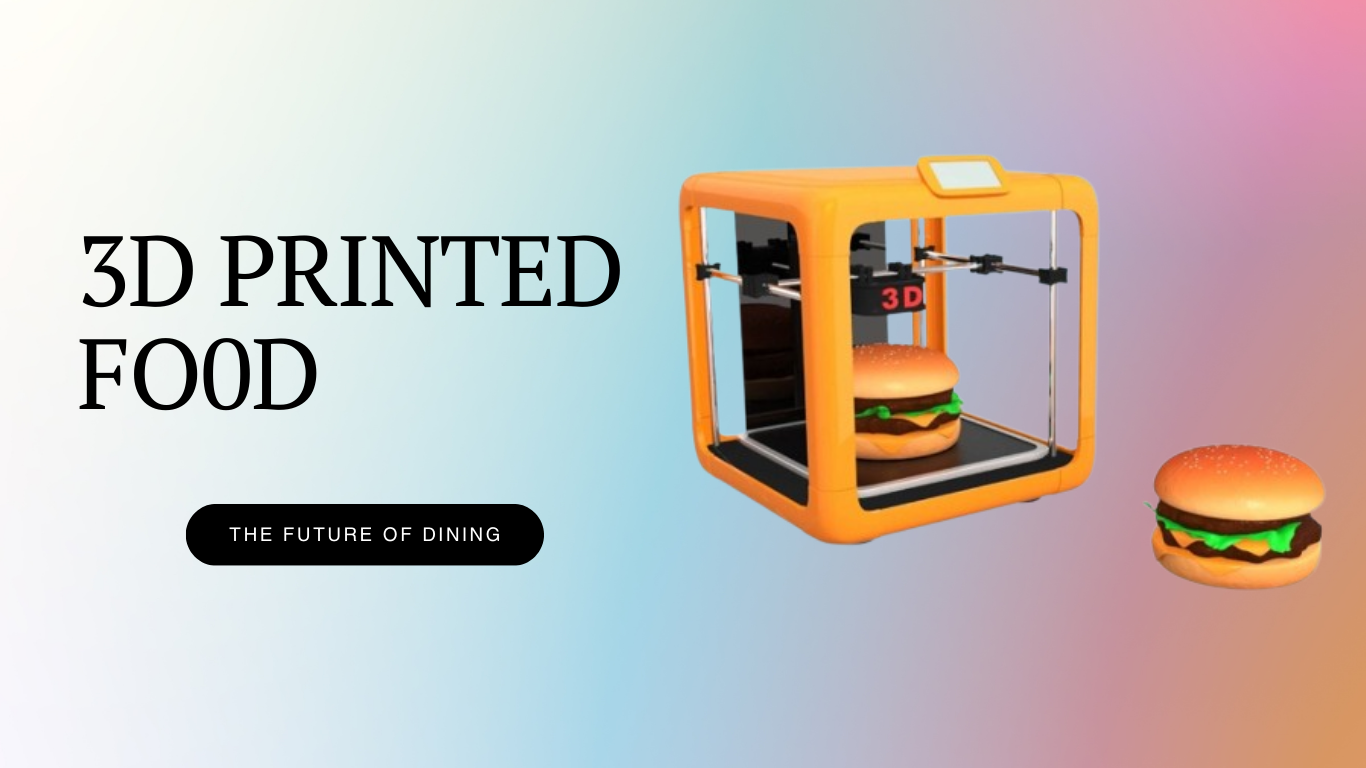
3D Printed Food | The Future of Dining
Imagine you’re hungry. Instead of stirring up a meal, you enter your menu choices into a computer, and your dinner appears before you. It may sound like science fiction, but the future is here. 3D-printed food is revolutionizing the way we think about dining and cooking. In this article, we’ll explore the exciting world of 3D-printed food, its history, current applications, and future potential.
The Beginnings of 3D Printing:
3D printing technology has come a long way since its inception. The origin of 3D printing dates back to the early 1980s. In 1983, researchers produced the first item using a 3D printer, an eyewash cup. Today, the process is used to create toys, prosthetics, and automotive parts. You can even have a 3D printer at home. But how did this technology move into the kitchen?
The Evolution of 3D Printed Food:
1. NASA’s Role in 3D Food Printing:
The journey of 3D-printed food began in 2006 when NASA started researching 3D-printed food to create pizzas for astronauts. The goal was to provide astronauts with nutritious and satisfying meals during long space missions. This research laid the groundwork for the development of 3D food printing technology.
2. Innovations at Columbia University’s Creative Machines Lab:
NASA wasn’t the only one interested in printing food. In 2007, researchers at Columbia University’s Creative Machines Lab produced the Fab@Home personal fabrication system, which could create edible objects using cake frosting, chocolate, processed cheese, and peanut butter. This innovation demonstrated the potential of 3D printing technology to create a variety of food items.
3. 3D Printed Candies and Beyond:
In 2011, the first bakery making 3D-printed goods opened. Using a standard 3D printer, Sugar Labs produced intricate candies marketed as ornaments. This milestone marked the beginning of the commercialization of 3D-printed food. By 2014, food-specific 3D printers were being created and marketed to restaurants to produce intricately designed meals. However, the food still needed to be cooked traditionally.
The Advancements in 3D Food Printing:
1. Laser Cooking:
Recently, researchers at the Creative Machines Lab have been searching for ways to cook food as it’s being printed. Their solution is lasers. Adding lasers to a 3D printer allows them to print and cook the food in the same machine. This innovation eliminates the need for traditional cooking methods and streamlines the food preparation process.
2. Taste and Quality:
How does it taste? Well, the laser-cooked 3D-printed chicken was twice as juicy as conventionally cooked chicken. It also didn’t shrink as much and tasted like regular chicken. This breakthrough demonstrates that 3D-printed food can be both delicious and high quality.
Benefits of 3D Printed Food:
1. Customization and Precision:
One of the significant benefits of 3D-printed food is the ability to customize meals according to individual preferences and dietary needs. The technology allows for precise control over the ingredients and portion sizes, making it possible to create meals tailored to specific nutritional requirements.
2. Fighting Food Waste:
Printing food could help fight food waste. Netherlands-based Uprising Foods wants to turn discarded food into edible printing material. This innovative approach could reduce food waste and create sustainable food sources. By utilizing surplus food and transforming it into edible products, 3D printing technology can contribute to a more sustainable food system.
3. Unique Dining Experiences:
If you want to experience 3D-printed food, you could visit Food Ink in the UK. This restaurant touts itself as a one-of-a-kind gourmet experience where all the food, utensils, and furniture are produced through 3D printing. A Japanese company has even created a standardized cube form of food using 3D printers, much like the food eaten by Captain Kirk and Mr. Spock on the Starship Enterprise.
Challenges and Considerations:
1. Cost and Accessibility:
While 3D food printing technology holds great promise, there are still challenges to overcome. One of the main challenges is the cost of 3D printers and the materials required for food printing. These costs need to be reduced to make the technology accessible to a broader audience.
2. Regulation and Safety:
Another challenge is the regulation and safety of 3D-printed food. Ensuring that printed food meets health and safety standards is crucial. Regulatory bodies need to establish guidelines and standards for the production and consumption of 3D-printed food to protect consumers.
3. Environmental Impact:
While 3D printing can help reduce food waste, it is essential to consider the environmental impact of the technology itself. The production of 3D printers and the materials used for printing can have environmental consequences. Therefore, it is necessary to develop sustainable practices and materials to minimize the environmental footprint of 3D food printing.
The Future of 3D Printed Food:
1. Expanding Applications:
The future of 3D-printed food is bright, with the technology expanding into various applications. Beyond creating customized meals, 3D printing can be used to produce food for people with dietary restrictions, such as gluten-free or allergen-free options. The technology also has the potential to create nutrient-dense food for individuals with specific health conditions.
2. Integration with Agriculture:
3D food printing technology can also integrate with agriculture to create sustainable food production systems. By using locally sourced ingredients and reducing food waste, 3D printing can contribute to a more sustainable and efficient food supply chain.
3. Future Dining Experiences:
As technology advances, we can expect to see more innovative dining experiences incorporating 3D-printed food. Restaurants may offer interactive dining experiences where customers can design their meals and watch them being printed and cooked before their eyes. This fusion of technology and gastronomy will create memorable and unique dining experiences.
Conclusion:
The future of dining is undoubtedly exciting, with 3D-printed food opening up new possibilities for sustainability, convenience, and innovation. From fighting food waste to creating unique dining experiences, 3D-printed food could revolutionize the way we think about meals. As technology advances and becomes more accessible, the potential for 3D-printed food to become a basic in our diets increases. Embracing this technology could lead to a more sustainable and efficient food system, providing solutions to some of the biggest challenges we face today.
FAQs:
1. What is 3D-printed food?
3D-printed food is created using a 3D printer that layers edible materials to form food items.
2. How does 3D-printed food taste?
Laser-cooked 3D-printed food, like chicken, is twice as juicy as conventionally cooked food and tastes similar to regular food.
3. Can 3D-printed food help reduce food waste?
Yes, companies like Uprising Foods are turning discarded food into edible printing material to reduce food waste.
4. What are some examples of 3D-printed food?
Examples include intricate candies from Sugar Labs, plant-based meat from Redefine Meat, and standardized cube food from a Japanese company.
5. Where can I experience 3D-printed food?
Food Ink in the UK offers a unique dining experience where all the food, utensils, and furniture are produced through 3D printing.
6. What is the future potential of 3D-printed food?
3D-printed food could become a sustainable and convenient food source, with the potential to fight food waste and create unique dining experiences.
AI Gadgets for a Smarter Life
Imagine living in a house that’s not just smart but downright genius, thanks to artificial intelligence (AI). Our living spaces are evolving in ways we could only once dream of. Picture a home that knows your daily routine so well it adjusts the thermostat without you lifting a finger or security cameras that instantly alert you to any unusual activity. Just like we transitioned from candles to electric lighting, AI is leading a revolution that’s turning our homes into responsive, intelligent environments. With each technological advancement, our living spaces become more familiar to our needs, making life not just easier but remarkably natural.
The Future of Home Automation:
Home automation is set to be truly remarkable. Imagine a home where everything from your lights and air conditioning to security cameras and appliances is seamlessly connected to a cutting-edge AI system that practically runs the house for you. It learns your morning coffee preferences, adjusts your shower temperature perfectly, and even handles chores like vacuuming while you relax. The future brings energy-efficient, voice-controlled homes that manage your day and keep you entertained. This tech revolution will make life more enjoyable and effortlessly streamlined.
Current Smart Home Capabilities:
So, how smart is your home right now? Can it turn off the lights with a command or play your favorite music when you’re in the mood? AI assistants like Alexa are becoming more prevalent, and many users find that these devices significantly simplify their lives. Multifunctional technology is on the rise, with innovations such as a coffee table that not only lights up your room but also purifies the air, or a cleaning robot that doubles as a personal DJ. From beds that massage you while tracking your sleep to fridges that plan meals, the possibilities are endless. Single-use gadgets are being replaced by innovative, multifunctional devices that make life more efficient and convenient.
AI in Smart Homes:
AI enhances convenience with just a click or a voice command, whether you’re in the living room, kitchen, or at the front door. The real game-changer is AI’s ability to learn from your habits and adjust automatically, predicting what you’ll need next. The demand for AI-powered smart home devices is skyrocketing, with the market expected to reach significant growth in the coming years. But why the rush? AI is making homes more secure, energy-efficient, and personalized.
Benefits of AI-Powered Smart Homes:
Better Security: AI-powered smart locks and cameras use advanced technologies like facial recognition and fingerprint scans to ensure that only trusted individuals can enter your home. These systems actively monitor for threats, reducing false alarms and ensuring you’re alerted to any potential issues.
- Energy Saving: AI helps save money by optimizing energy use. It learns your habits and adjusts settings like lighting and temperature in real-time, reducing energy consumption without sacrificing comfort.
- Improved Functionality: AI gadgets learn your preferences. For instance, a smart thermostat adjusts the temperature automatically based on your daily routine, while smart lights can brighten or dim according to the time of day or your activity. This makes life easier with minimal effort.
AI also enables smart homes to function more independently. Devices can anticipate your needs and detect anomalies like unusual energy usage or unexpected motion, which could signal a security risk. From adjusting lights to managing appliances with voice commands, AI is making homes smarter and more adaptive. Imagine coming home to perfectly adjusted lighting and temperature without lifting a finger or enjoying the peace of mind that comes with knowing your security system is constantly learning and improving.
Popular AI-Powered Technologies:
- Google Nest Wi-Fi: This mesh system ensures strong, reliable Wi-Fi throughout your space, and with the Google Home app, you can control everything right from your phone and even set up parental controls with a quick voice command.
- Abode Smart Security Kit: This DIY system works with Alexa, Google Assistant, and HomeKit. It also connects with other smart home gadgets, giving you a comprehensive security setup.
- Arlo Video Doorbell: This not only alerts you when someone’s at your door but also identifies if it’s a person, package, or even your pet. You can chat with visitors through your phone.
- Nest Protect Smoke and CO Alarm: Detects smoke and carbon monoxide, sending alerts straight to your phone and telling you which room the issue is in.
- Philips Hue: Offers customizable smart lighting that you can control with your voice or smartphone. With options for bulbs and motion sensors, you can tailor your lighting to fit any situation.
- TP-Link Kasa Smart Plugs: These smart plugs let you monitor energy usage and control devices remotely. They are budget-friendly and help you save more in the long run.
- Sonos One: This smart speaker integrates with both Alexa and Google Assistant, offering fantastic sound quality. You can sync it with other speakers for an awesome, seamless music experience.
- Google Nest Hub Max: A smart display that personalizes content based on who’s using it. It includes a built-in camera that doubles as a security system.
- Nest Learning Thermostat: Learns your habits and adjusts the temperature accordingly. It also manages your hot water and heating system, enhancing energy efficiency while keeping you comfortable.
- Roomba i3+: A game-changer for cleaning. It learns your home’s layout and empties itself, and you can control it with voice commands through Alexa or Google.
The Future of Smart Homes:
Home robots are becoming more charming and capable. For example, a pet robot can manage smart devices and interact with you in engaging ways. The combination of AI and robotics adds efficiency and personality to home automation. Biometric security is another exciting trend. Instead of fumbling with keys or remembering passwords, you’ll unlock your home with facial recognition or fingerprint scans. This personalized security ensures that only authorized individuals can enter, enhancing convenience and safety.
Thanks to the Internet of Things (IoT), devices can now communicate with each other and with us. Whether it’s your lights, security cameras, or even your washing machine, IoT is making home management incredibly simple. You can control everything right from your phone and automate daily tasks, blending cool technology with practical convenience.
Health and Wellness:
IoT also extends to health and wellness. Fitness trackers and healthcare monitoring devices can keep you on top of your health. AI-powered virtual assistants can recommend healthier food choices and remind you to take your medications. If you have elderly parents at home, smart sensors can be a lifesaver. For instance, sensors in the flooring can detect if a fall occurs and alert you no matter where you are. Bed sensors can let you know if your parent hasn’t gotten up as expected, and tracking devices on their watches can help you find their location instantly.
Data Security:
With all this amazing technology, keeping your data safe is crucial. Strong encryption, secure passwords, and careful data management are key to protecting your personal information. As technology keeps evolving, the future of smart homes looks incredibly promising. Faster networks and advanced AI will make our homes even smarter and more responsive to our needs. This IoT revolution is just getting started, and the possibilities are truly endless.
Conclusion:
AI gadgets are revolutionizing our living spaces, making homes smarter, more efficient, and more enjoyable. With advancements in technology and the increasing integration of AI and IoT, the future of smart homes looks incredibly promising. From enhanced security and energy savings to improved functionality and health monitoring, AI-powered devices are set to transform our daily lives, making home management effortless and enjoyable. As we continue to embrace these innovations, our homes will become even more responsive and attuned to our needs, creating a smarter and more connected world.
FAQs:
1. What is a smart home?
A smart home uses internet-connected devices to enable remote management and automation of household systems like lighting, heating, security, and entertainment.
2. How does AI enhance smart homes?
AI enhances smart homes by learning from your habits and adjusting settings automatically. It provides better security, energy savings, and improved functionality.
3. What are some popular AI-powered smart home devices?
Popular devices include Google Nest Wi-Fi, Abode Smart Security Kit, Arlo Video Doorbell, Nest Protect Smoke and CO Alarm, Philips Hue, TP-Link Kasa Smart Plugs, Sonos One, Google Nest Hub Max, Nest Learning Thermostat, and Roomba i3+.
4. How can smart homes improve security?
Smart homes improve security with AI-powered smart locks and cameras that use facial recognition and fingerprint scans to ensure that only trusted individuals can enter your home.
5. What role does IoT play in smart homes?
IoT allows devices to communicate with each other and with you, making home management incredibly simple. You can control everything right from your phone and automate daily tasks.
6. How can smart homes benefit elderly parents?
Smart sensors can detect falls, alert you to unexpected inactivity, and help locate elderly parents instantly, providing peace of mind and enhancing their safety.